
Natural Formation
Milan Red Marble is a naturally formed stone, developed through long-term geological processes.
Its distinctive appearance is created by mineral infiltration, crystallization, and structural transformation over time.
Variations in mineral distribution and density result in visible differences between slabs, making each piece naturally unique.
Color and Texture Characteristics
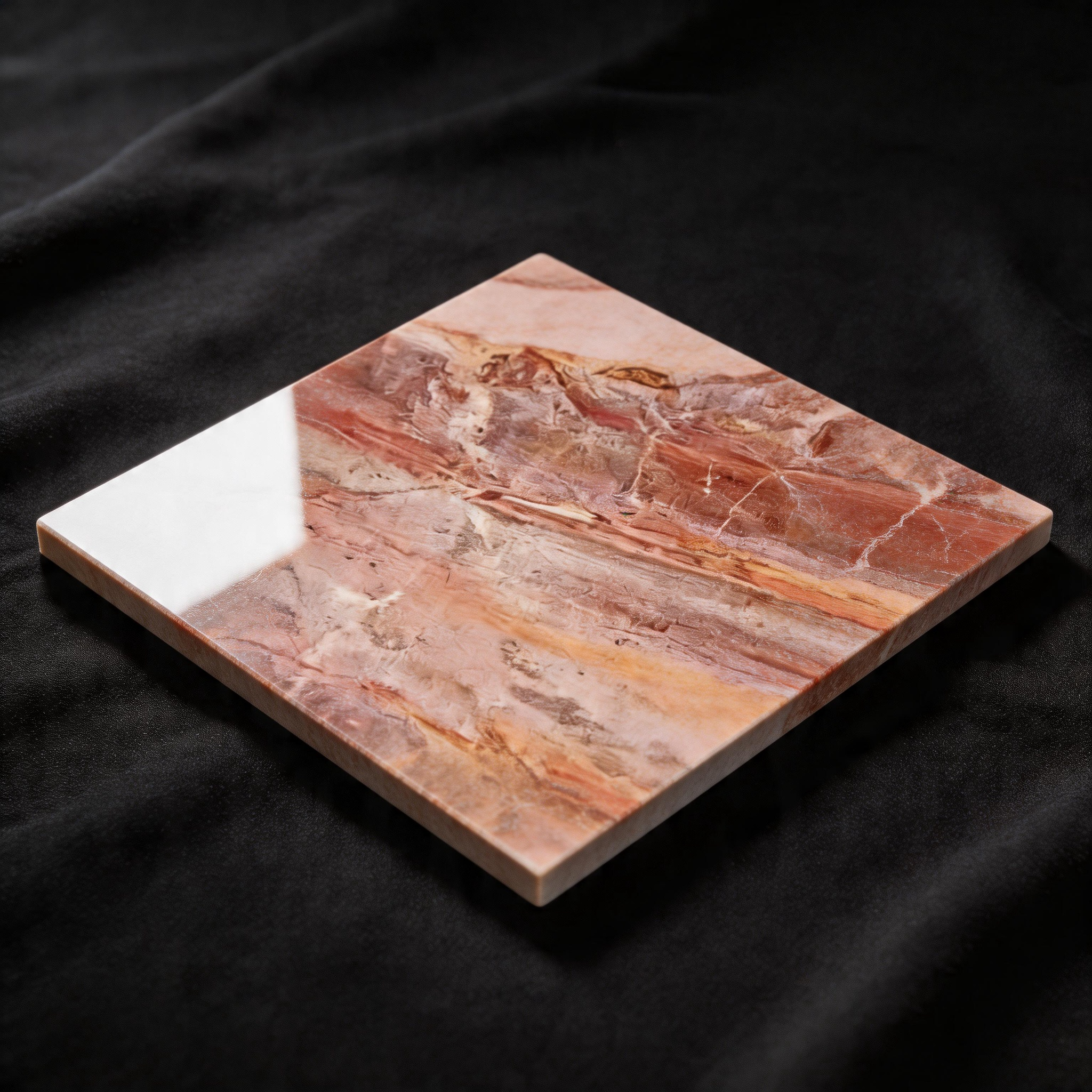
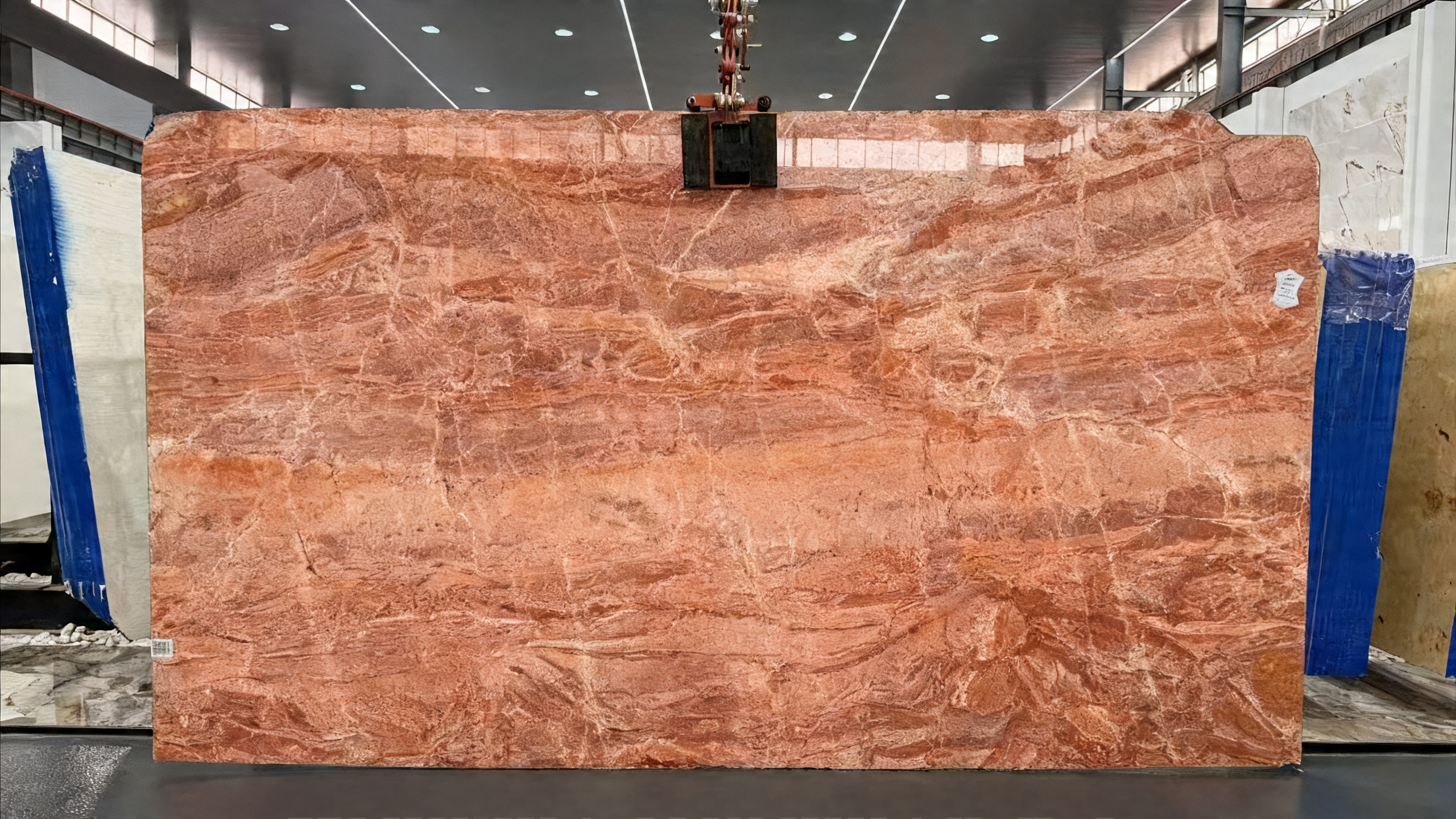
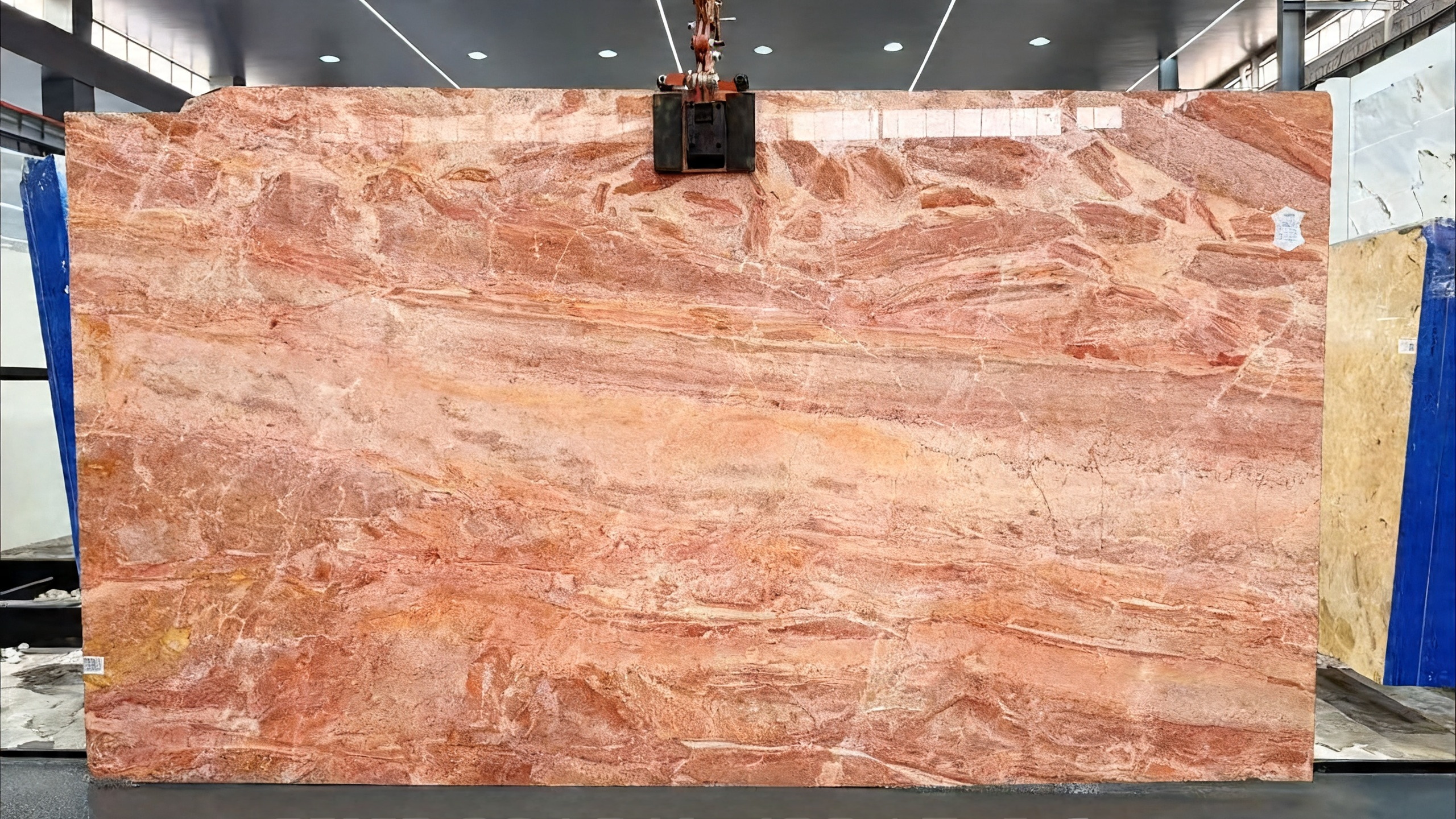
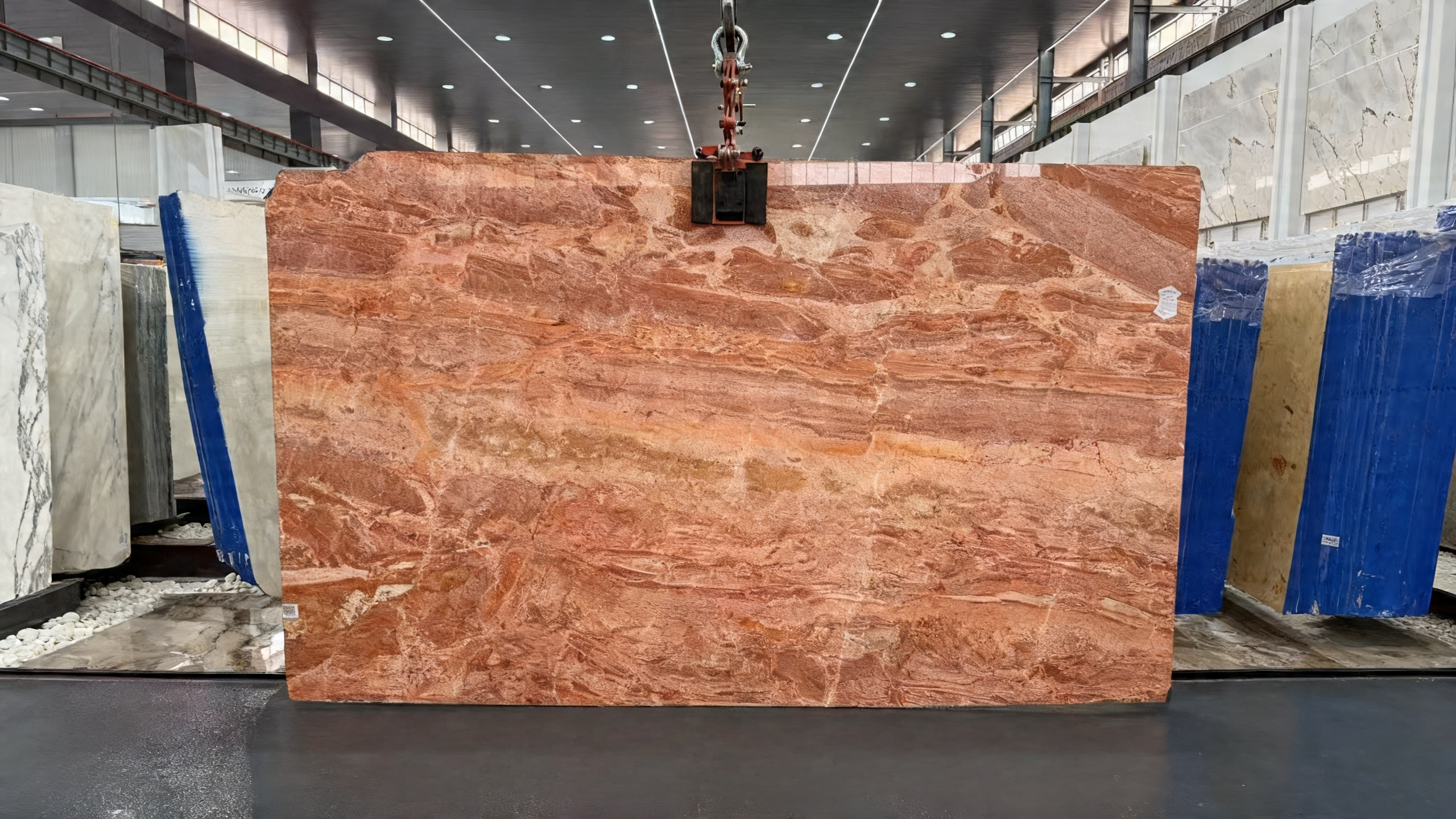
The stone features a deep red to burgundy base tone, with natural variations in saturation, brightness, and warmth.
These differences are caused by mineral concentration changes, rather than any artificial coloring.
The texture is defined by white to light gray veining, showing:
- Irregular linear patterns
- Fragmented vein structures
- Web-like natural intersections
In some areas, veins appear more concentrated and sharp, while in others they become more diffused and soft, forming natural transitional gradients.
The overall pattern is:
- Non-uniform
- Non-directional
- Non-repetitive
Each slab therefore presents a completely unique visual identity.
Design Applications
Due to its strong color contrast and dynamic natural veining, Milan Red Marble is widely used in:
- Feature walls
- Luxury background walls
- Kitchen countertops
- Reception areas
- Custom architectural panels
The material supports both:
- Bookmatching (vein matching) layouts
- Free composition layouts
This allows designers flexible control over visual rhythm and spatial impact.
Material Expression
The visual identity of Milan Red Marble is determined by its internal mineral structure, rather than surface treatment.
Its red base tone and light veining contrast remain stable under different lighting conditions, ensuring a consistent material expression in architectural environments.